F1-style Aprilia MotoGP aero revolution uncovered on eve of 2026 season
Aprilia has brought a first-of-its kind MotoGP aero development to the first round of the 2026 season in Thailand.

Aprilia has brought one of the most innovative aerodynamic developments of recent years to the first round of the 2026 MotoGP season.
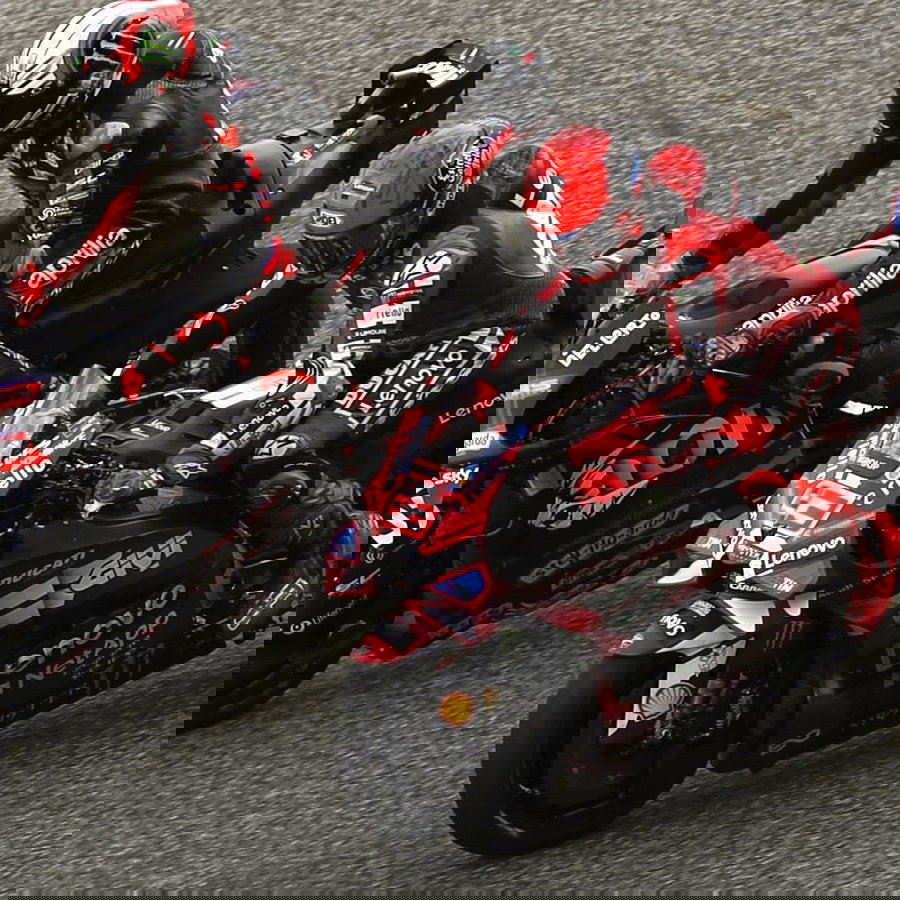
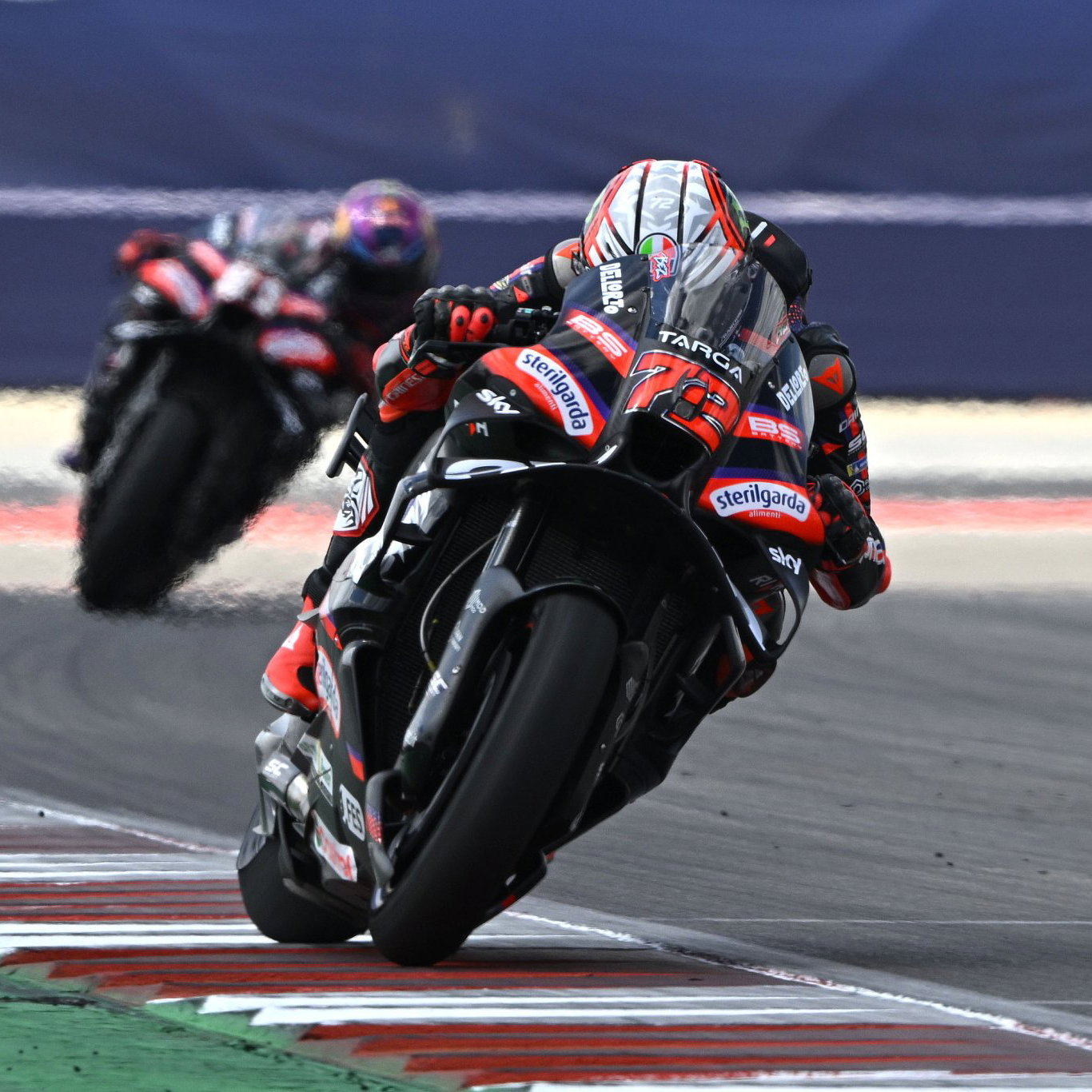
Reporting from The Race has shown that Aprilia is using a new fairing for the start of this season that features a pair of intakes at the front of the fairing and a pair of exhaust outlets at the back of the bodywork, where the rider would fold their arms into when tucked in on the straights. The new fairing design means the rider’s arms now cover the exhaust outlets.
The operation of the new fairing is reminiscent of the McLaren F-duct used in Formula 1 in 2010, which saw drivers plugging a hole in the cockpit with their knee (other teams developed hand-based systems, which ultimately got the device banned for 2011). That action caused air flow from the top air intake to be redirected away from the engine and gearbox to the rear wing. There, it was directed through the slot gap between the mainplane and upper flap to create flow separation on the trailing edge and thus stall the wing, reducing drag and increasing straight line speed.
The similarities with McLaren’s F-duct, plus the fact that the system is operated in a straight line, points to a positive effect that is felt in a straight line, which in turn suggests drag is being shed somewhere.
Exactly where that drag is being shed is difficult to say with complete certainty without knowing the path the air takes when the outlets are covered, where the air exits, and in which direction. The Race suggests that the air exits through the side of the main fairing and is used to stall the outer part of the fairing which is curved in such a way as to create mid-corner downforce.
The new fairing was first used at the Sepang test, then again at the two-day Buriram test, but has gone largely unnoticed until now. It remains to be seen if Aprilia will use the fairing in the race, but it was used throughout practice on Friday – which Marco Bezzecchi topped – and so to change it would mean homologating a new fairing.
That also means that developing their own system would require a new fairing to be homologated for MotoGP’s other manufacturers. Each MotoGP rider is allowed one fairing update per season, with the exception of Yamaha’s riders; the Iwata marque’s tier four concessions status means it is allowed two fairing updates but must discard the previous fairing once a new one is introduced.
In this article


Alex joined the Crash.net team in August of 2024 having covered consumer and racing motorcycle news at Visordown for two years.