Have F1's maligned 2026 rules improved often-criticised sprints?
F1 writer Sam Hall delivers his early verdict on sprint racing in the 2026 F1 season, following an exciting contest on Saturday morning at the Chinese Grand Prix

Both the new 2026 Formula 1 rule set and sprint races are topics that divide opinions among the championship’s ever-growing fanbase. But when the two elements came together in China, was a tasty dish created?
Like everyone, I have my own thoughts on both of these topics, so, for the sake of debate, I’ll lay them out in the open. Sprint races have so far not been for me. The action has often been muted or limited to the first few laps, and other than increasing ticket sales and increasing revenue, I’ve never seen the wider appeal.
On the current regulations, alongside other members of the Crash.net team, I believe it is too soon to cast judgment, given the small sample size. There was a lot not to like from Australia, especially in qualifying, but it wasn’t all as bad as some commentators would have you believe.
The admin out of the way, we turn to China.
With a thoroughly predictable front row of George Russell and Kimi Antonelli, all hope for an entertaining race fell on the shoulders of Ferrari, and the launches of Lewis Hamilton and Charles Leclerc. Yes, Lando Norris started ahead of both for McLaren, but as seen in Australia and across testing, the Ferrari is a demon off the line.
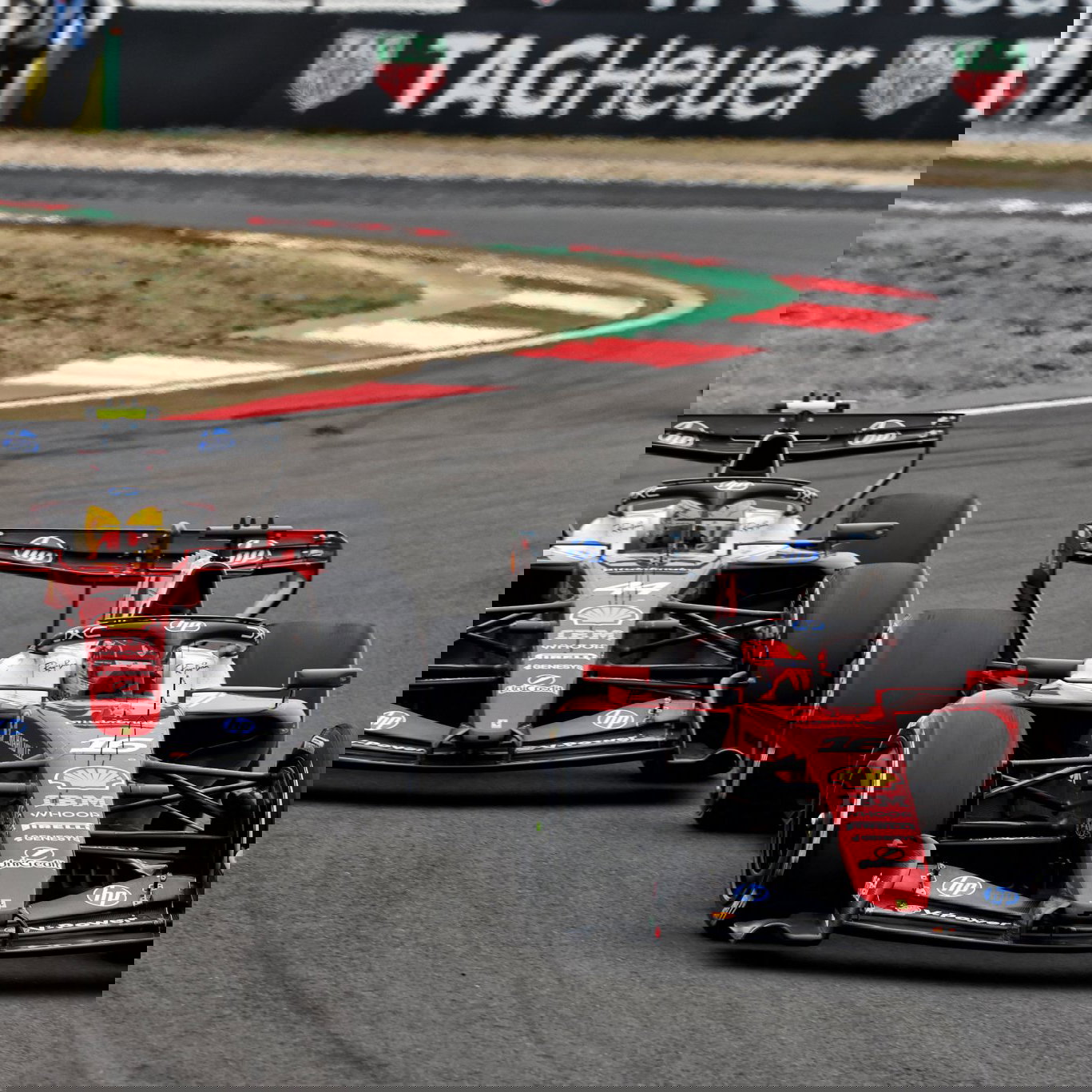
Fortunately, both Ferrari drivers delivered on this promise, and Hamilton swiftly took the lead before engaging in a ding-dong battle with his former Mercedes team-mate.
As is typical of an opening lap, the action was frantic throughout the order, with contact, spins, overtakes, and general mayhem wherever you looked. Grab the popcorn, fetch a blanket, and count me in.
Like in Australia last week, Overtake Mode proved crucial to maintaining the close-quarters actions. Numerous times across the opening laps, Hamilton and Russell threw punches and counterpunches, exchanging positions at the front as they discovered the best way to use their deployment. It really was engaging and held me glued to the action.
F1 Chinese GP sprint race: The negative
Now for the negative, however, and there are a couple of major points to discuss here. The battle at the front did not last forever – when does it? – and the moment Russell was able to break clear of the one-second margin and rob Hamilton of Overtake Mode, the Mercedes driver was gone into the distance.
The only reason that intrigue remained until the final lap came due to a safety car intervention, which served to bunch the field back up and reintroduce an element of jeopardy. With most drivers stopping, this also gave Liam Lawson and Ollie Bearman the chance to try something different by staying out. Both scored points through this gamble.
Were it not for this interruption, the story would likely have been a copy-and-paste repeat of Australia. Yes, the start was good and we had more laps of action than last year, but ultimately, the second half of the race was a bit of a flop.
Antonelli was able to bounce back from a poor start to get himself back in the mix with alarming ease, highlighting the ‘Mario Kart mushroom’ comments made by drivers in Melbourne. Some will say it was too easy, but when you have a car that Russell qualified six-tenths clear of third-placed Norris, passing significantly slower midfield runners was never going to be the most taxing of challenges.
F1 Chinese GP sprint race: The verdict
As with my evaluation of the regulations, I caveat this immediately by saying that one swallow does not make a summer.
However, the Chinese Grand Prix sprint race was a thoroughly entertaining affair and I have no shame in saying that I rather enjoyed it. Unless taking place in wild conditions, there will almost never be a race where the action goes the distance, so a hit rate of thrills for about two-thirds of the duration is a very good hit rate.
Yes, battles were very much dependent on having Overtake Mode, but that is the nature of the new regulations. Across a short duration and without too much time to escape this grip, it works. Across a Grand Prix distance, that may be another question.
My biggest takeaway from Saturday’s race is that I’m now actively looking forward to the next sprint weekend, something I can’t say has been the case before. That said, having looked at the venue – Miami – my excitement has dwindled ever so slightly.
So, have the 2026 regulations improved sprint racing in F1? The early verdict is, in short, yes.


Sam joined Crash.net in February 2026 with extensive experience in motorsport media, having covered numerous championships around the world.