Everything we learned on Friday at the F1 Australian Grand Prix
F1 2026 has officially begun. Here is what we learned on the first day of running in Melbourne.

The first day of meaningful on-track action in the 2026 Formula 1 season has concluded at the Australian Grand Prix.
The radical rules overhaul for 2026 is set to create one of the most unpredictable campaigns in years, with the competitive order still unknown after the opening day of running in Melbourne.
McLaren and Oscar Piastri set the outright fastest lap, but he doubts the reigning champion team’s pace matches to Mercedes.
Red Bull made a promising start with its new Ford-backed engine, while Ferrari’s pre-season form looks to have remained.
Here’s everything we learned from the first competitive day of running in Melbourne on Friday…
Aston Martin and Honda in a world of pain

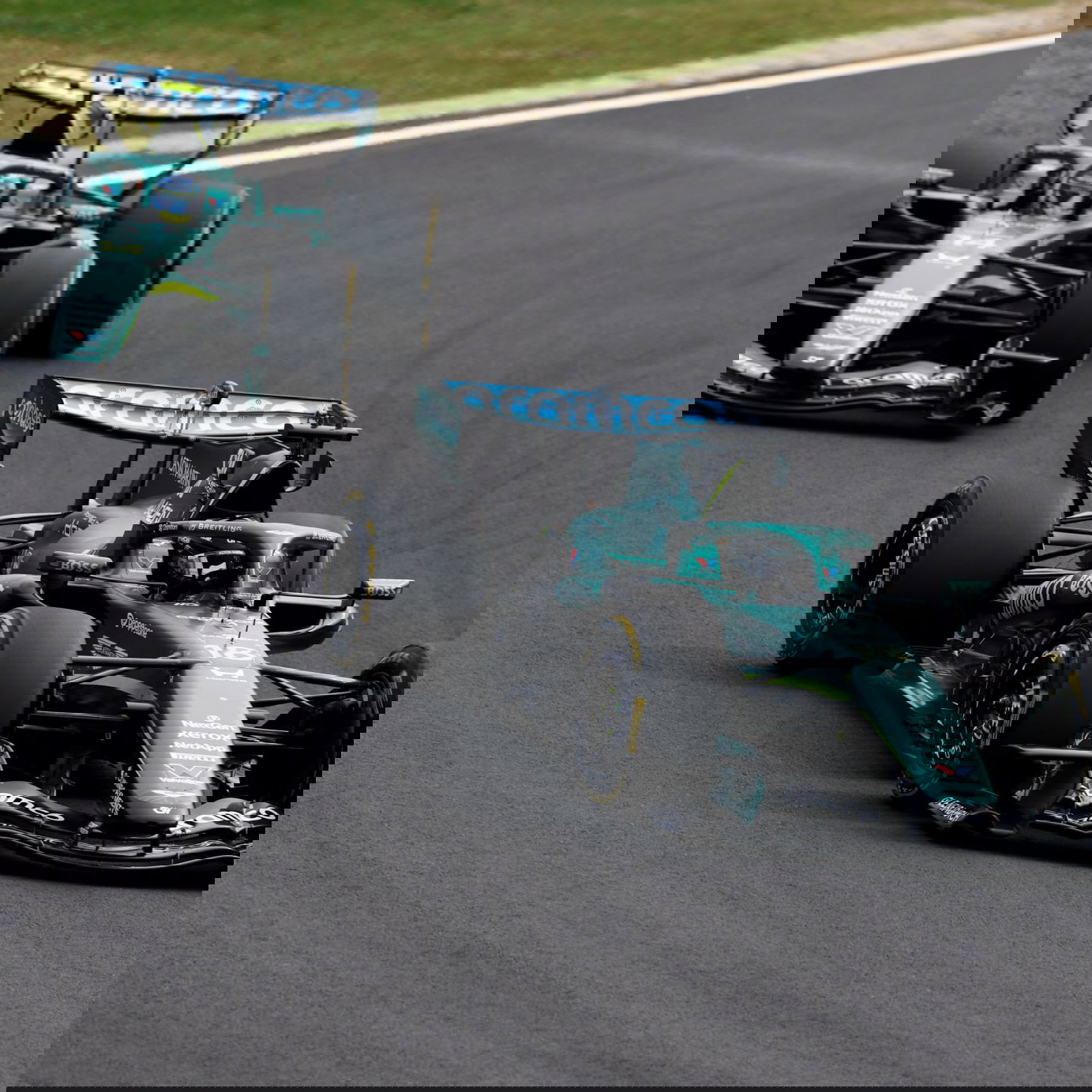
Aston Martin was braced for a tough start to F1 2026, but things got off to an even worse start than expected in Friday practice as major power unit issues struck.
Lance Stroll managed just three laps in FP1 and Fernando Alonso did not get out of the garage in a troubled first practice. Team boss Adrian Newey made the stark revelation that Aston Martin has no more spare batteries for its Honda power units in Australia after losing two in the first session.
Aston Martin’s woes continued in second practice, with Alonso and Stroll finishing five seconds adrift. Alonso’s AMR26 at least held up long enough for the Spaniard to complete 18 laps, but Stroll only managed 13 before his session was ended by another engine problem.
Newey worryingly admitted he feels “powerless” in the current situation with Aston Martin clearly a team in a world of pain at the start of 2026.
Ferrari hype train might have traction

Ferrari made an encouraging start to F1 2026 as Charles Leclerc and Lewis Hamilton completed a one-two in opening practice.
That form did not quite translate into FP2 as McLaren and Mercedes moved ahead, but Ferrari once again featured towards the top of the timesheet, with Hamilton just three-tenths down as the only driver to feature inside the top four in both of Friday’s sessions.
Headline lap times from practice can be misleading given the usual caveats that we do not know exactly what fuel and engine modes the teams are using, and teams do their laps at different times of the session, but Ferrari looks to have made genuine progress off the back of a horrendous 2025.
Arguably, the most impressive aspect for Ferrari was that it enjoyed a trouble-free day from a reliability standpoint, something none of its rivals can say.
Mercedes a step ahead of tight top four

After Ferrari’s early promise, it was Piastri who finished the first day of running of the new F1 season leading the way in his McLaren. The Australian ended up 0.214s quicker than the Mercedes pair headed by Andrea Kimi Antonelli.
It is worth noting that Silver Arrows set the pace earlier in the session when the track was less rubbered in, while Piastri enjoyed the best conditions when the circuit would have been at its fastest.
Mercedes also appeared to be significantly quicker than Ferrari during the race-simulation runs in FP2, however this comparison is limited as the other top teams did not use the same hard tyre. Leclerc was quick to point out Mercedes’ “impressive” race pace, labelling the Silver Arrows “a step ahead”.
Red Bull look a little bit off the pace of F1’s other top teams, at least over one lap, but there are encouraging early signs to suggest that 2026 won’t be a one-horse race with one team stealing a march on the rest. Instead, we could be set for a tight four-way battle which will likely see-saw throughout the season amid an intense development race.
We won’t get a first proper look at exactly where everybody shapes up in the true competitive order until qualifying, but an early picture is at least starting to emerge…
The world champion is on the back foot

It wasn’t an ideal start to the opening weekend of Lando Norris’s F1 title defence. The reigning world champion was struck by a reliability issue in the form of rough gear shifts that limited his running to just seven laps in first practice.
Norris suffered more gremlins in FP2 but largely enjoyed uninterrupted running. However, he finished well off the pace of his teammate Piastri down in seventh in the timesheet. The Briton only completed one clean flying lap on fresh softs, which left him with an eye-opening one-second deficit.
With another hour of practice still to come before qualifying, there is no reason for Norris to be panicking just yet, but it certainly hasn’t been a smooth start in Australia, leaving him slightly on the back foot.
Teething trouble galore

There was teething trouble galore throughout both practice sessions as F1 teams continue to get to grips with their new-for-2026 machines.
Aston Martin and Honda’s well-documented woes aside, almost everyone faced some kind of gremlins on Friday.
Toto Wolff referenced “teething problems” in Mercedes’ software as the pre-season favourites battled power unit issues, while McLaren’s FP1 running was curtailed, before it enjoyed a smoother FP2.
Max Verstappen lost crucial track time after a technical glitch caused him to stop at the exit of the pit lane at the beginning of FP2. The problem, which left Verstappen stuck in gear, meant the four-time world champion was garage-bound for nearly half of FP1.
At F1 newbies Cadillac, Sergio Perez had a rough start to his first race weekend in over a year. The returning Mexican managed just 14 laps in FP1, and spent most of FP2 in the garage. When he did finally emerge, a suspected hydraulics issue caused Perez to stop on track.
Hydraulic issues also brought Alex Albon’s first practice session to a premature end on a difficult day for the struggling Williams team.
F1’s sole rookie shines

It was an impressive start to life in grand prix racing for F1’s sole rookie Arvid Lindblad. The Racing Bulls driver turned in an incredible performance on his first full practice day as an F1 driver, finishing fifth in FP1 and eighth in FP2.
Not only was Lindblad quick - and faster than experienced team-mate Liam Lawson - he made no notable errors. The only real drama the young Briton had was his pitlane clash with George Russell at the start of FP2, which the stewards ruled to be the Mercedes driver’s fault.
It’s still very early days but as starting points go, Lindblad couldn’t have hoped for much better.
Qualifying could be chaotic

Several drivers have expressed concern over Saturday’s qualifying session in Australia, predicting it could be the wildest in years.
This is down to the emphasis placed on energy harvesting and battery deployment of F1’s new generation of cars as a result of new power unit rules.
There was a scary moment during second practice when Hamilton had to have his wits about him to avoid a collision with Franco Colapinto when the Alpine driver suddenly slowed halfway down the start-finish straight.
Hamilton and Colapinto’s near-miss has raised fears about dramatic speed differences between cars on flying laps and those harvesting.
How drivers will prepare for their qualifying laps is set to be totally different in 2026, with Albon warning “we’re not seeing the worst of it, at the minute”.
Piastri said: “Most of us are launching our laps halfway down the pit straight, so trying to judge the car behind is very, very tough. Certainly, there are pretty major quirks that we are going to have to get used to.”
McLaren is braced for traffic to be a bigger problem than before in qualifying.
“It’s very easy to plan ahead and in previous years you make your plan and it doesn’t really get too upset by what happens 300 yards, 200 yards or 500 yards before the start-finish line,” McLaren chief designer Rob Marshall explained.
“You’d always hit it at the right speed and you’d know how much energy you’d have. Now it’s quite difficult. You need to get it spot on. You could get a bit had over by traffic, particularly.”
In this article


Lewis regularly attends Grands Prix for Crash.net around the world. Often reporting on the action from the ground, Lewis tells the stories of the people who matter in the sport.