What past major F1 rule changes tell us about how 2026 will go
Do past F1 regulation overhauls provide any clues for the upcoming 2026 season?

Formula 1 is about to race into the unknown with a bold new era beginning in Australia next weekend.
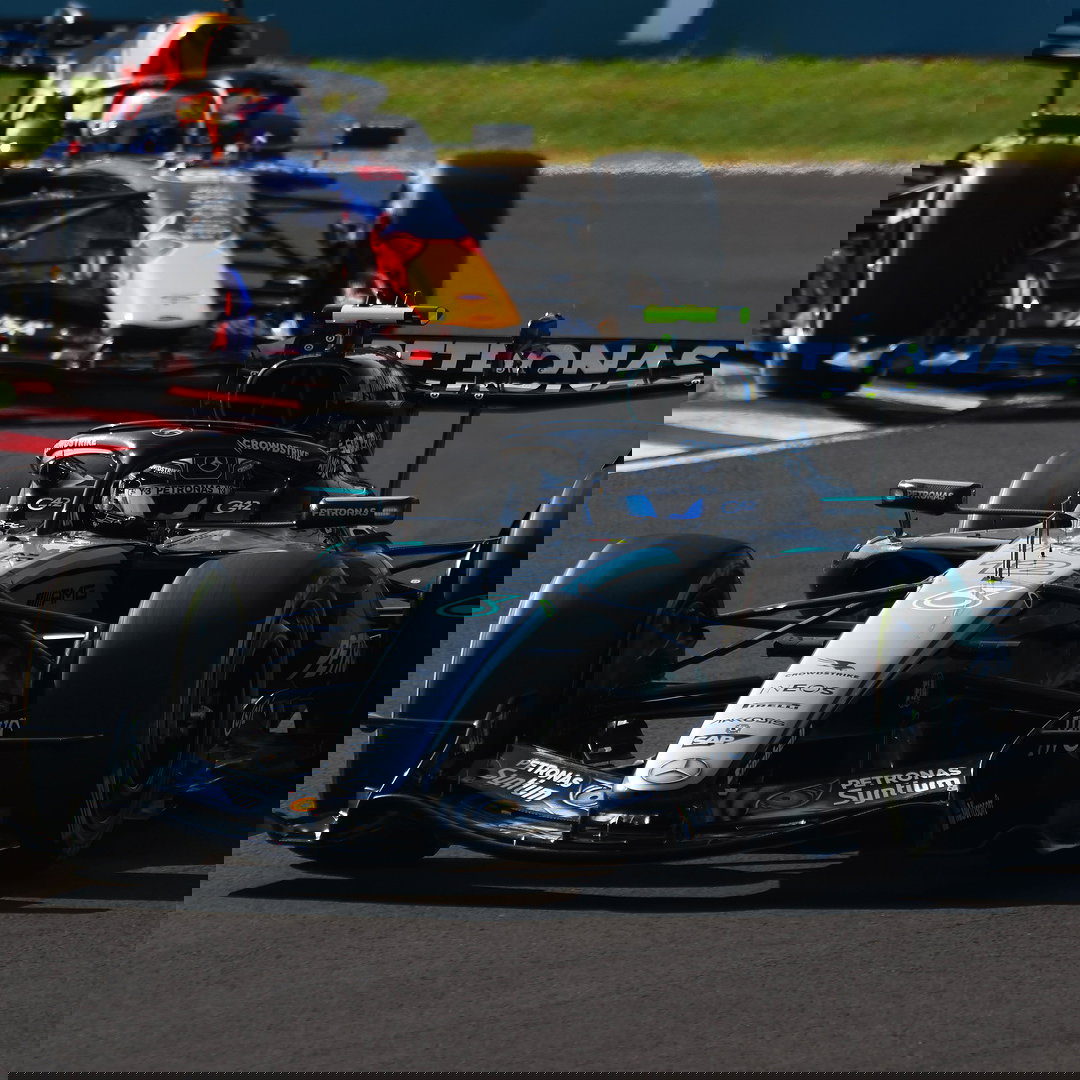
For 2026, F1 has undergone arguably the biggest regulation shake-up in the world championship’s history, with redesigned smaller, and lighter cars featuring active aerodynamic components and new engines that deliver a near 50-50 split between combustion and battery power.
Following the conclusion of pre-season testing, there is huge intrigue and mystery surrounding the competitive order heading into what is set to be an unpredictable and thrilling F1 season.
A look back at F1’s recent history might offer some clues about how the upcoming 2026 campaign may pan out…
2009 - Aerodynamics Overhaul

The 2009 season was the last time we had movable aerodynamics in F1, with eye-catching front wings featuring flaps which could be adjusted with a switch on the steering wheel.
F1 cars were redesigned for 2009 as part of a bid to improve overtaking. Other than the aforementioned driver-adjustable front wings, winglets and other aero devices were banned to make cars cleaner and reduce the impact of dirty air.
Slick tyres were re-introduced, and teams had the option to use an all-new KERS (Kinetic Energy Recovery System), which converted wasted energy into an extra 80 horsepower boost for a handful of seconds per lap to aid overtaking or defending position.
The regulation reset shook up the competitive order and opened the door to one of the greatest F1 stories of all time, with Brawn GP going from the brink of folding when Honda pulled out at the end of 2008 to claiming a fairytale title win for the ages.
Brawn GP capitalised on the new rules with the introduction of the double diffuser, while previous F1 frontrunners McLaren and Ferrari dropped the ball and struggled. This innovation offered superior rear-end downforce and resulted in a significant lap time advantage.
Such early development would be key to Brawn GP and the team came out of the gate flying, with Jenson Button winning six of the opening seven races. Brawn GP would only take two more victories in the remaining 10 rounds, with its early-season form proving crucial to securing an incredible double world championship, including a maiden drivers’ crown for Button.
2014 - Hybrid Turbo Era

The next major regulation change in F1 took place in 2014. This was one of the biggest in the world championship’s history, with a move from 2.4-litre naturally aspirated V8 engines to 1.6-litre V6 turbo hybrid power units.
F1’s switch to hybrid turbo engines was controversial and ushered in an era of dominance for Mercedes and Lewis Hamilton. Having transformed the Brawn GP outfit to the Mercedes factory team in 2010, the German manufacturer’s decision to prioritise focus and resources into the 2014 engine project paid off.
Mercedes emerged as the class leader, having developed a power unit that would become the dominant force of the mid-to-late 2010s. Mercedes won 16 out of 19 races and secured both world championships in 2014, with Hamilton vindicating his shock switch from McLaren to become a two-time world champion.
Mercedes would go on to claim eight straight constructors’ world championships and won seven of the eight drivers’ world titles between 2014 and 2021, with Hamilton picking up six of them.
Even a smaller regulation overhaul and a move to longer, wider and faster cars in 2017 failed to stop the Mercedes juggernaut, though Ferrari and later Red Bull would emerge as much bigger threats as the field converged towards the end of the regulation cycle, resulting in the epic and contentious 2021 title fight between Hamilton and Max Verstappen.
2022 - the return of ground effect

F1 entered a new dawn in 2022 with a drastic overhaul that saw the return of ground effect cars. This would become an era dominated by Red Bull, and specifically Verstappen.
Red Bull claimed 21 of 22 race wins in 2023, with the RB19 officially becoming the most dominant F1 car in history, achieving a 95.5% winning percentage.
McLaren caught up midway through 2024 but Verstappen was still able to seal a fourth successive drivers’ crown, before the Woking squad eventually overtook Red Bull and closed out the ground-effect era with double championship-winning success in 2025. Lando Norris pipped Verstappen by a whisker to clinch his maiden world title in a nail-biting three-way showdown at the Abu Dhabi finale.
Who will be the team to beat in F1 2026?
These past regulation shifts suggest that the upcoming F1 season will favour teams with the strongest engine and chassis integration, and those with the best in-season development.
Starting out quickly doesn’t necessarily always guarantee success - see Ferrari in 2022 - but it can lay vital foundations for a title charge as Brawn GP demonstrated in 2009.
Based on Mercedes’ past success of nailing the 2014 regulation shake-up, this is why many consider the Silver Arrows and George Russell to be favourites for 2026.

A strong pre-season only further underlined the general consensus in the paddock that Mercedes will be the team to beat, though there was no clearly dominant car that emerged.
Ferrari, McLaren and Red Bull should also be competitive with F1’s top four teams expected to maintain the status quo, though question marks remain over the exact pecking order.
All eight drivers at those teams could potentially have a shot at becoming world champion in 2026, but whoever adapts quickest and best to the new energy management rules and driver tools will have a significant advantage.
Time will tell who gets F1’s latest revolution right but the season-opening Australian Grand Prix will provide the first proper glimpse at how things could pan out.
In this article


Lewis regularly attends Grands Prix for Crash.net around the world. Often reporting on the action from the ground, Lewis tells the stories of the people who matter in the sport.