Should it stay or go? Our writers' view on Barcelona’s surprise F1 lifeline
Our writers react to the news that Barcelona has been handed a new F1 deal

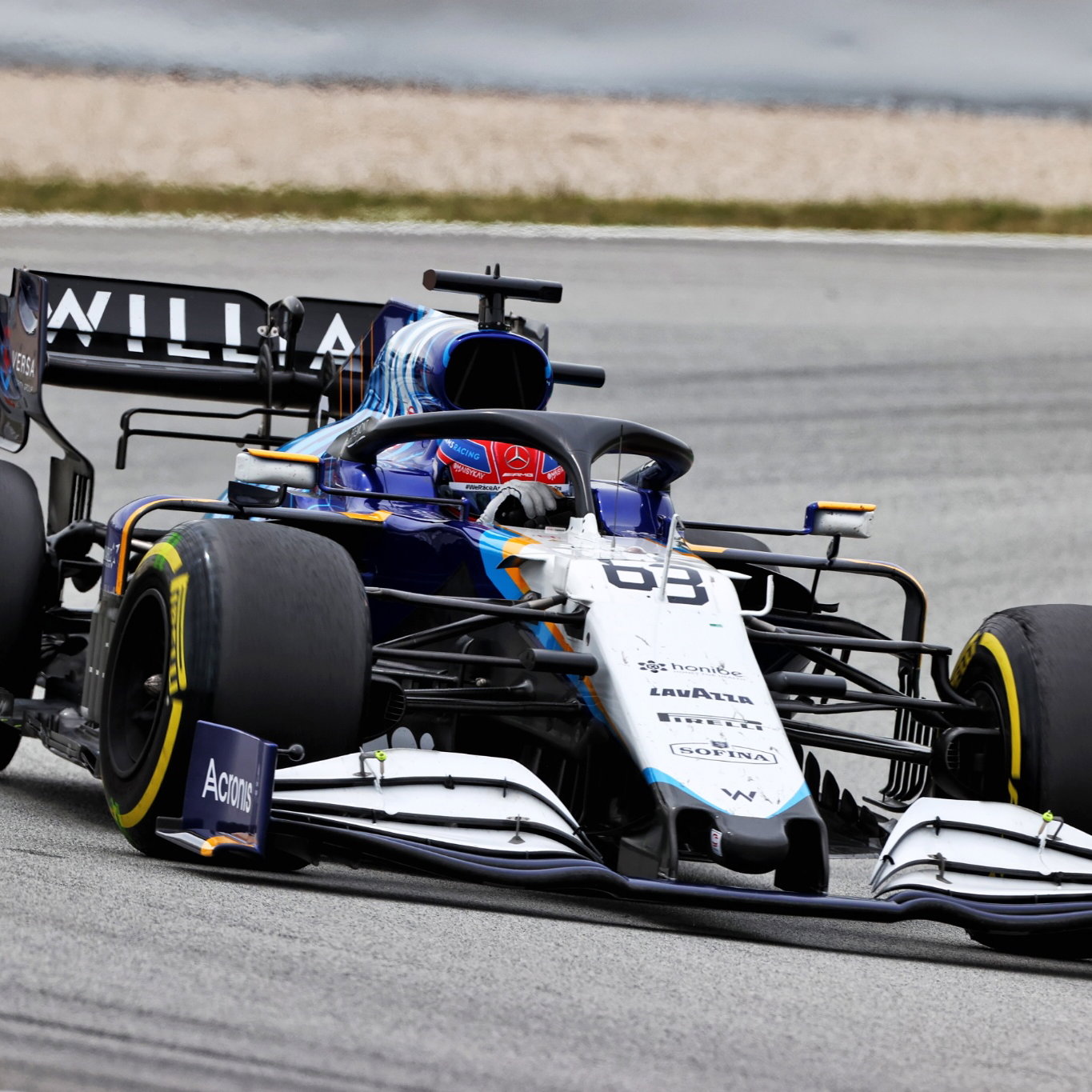
Barcelona will remain on the Formula 1 calendar until 2032 after being handed a surprise lifeline.
F1 announced the deal that will see the Circuit de Barcelona-Catalunya feature in a yearly rotation with the Belgian Grand Prix on Monday.
Barcelona had faced an uncertain future with its previous contract expiring at the end of 2026, while the addition of a new home of the Spanish Grand Prix in Madrid this year led many to believe the Montmelo venue would drop off altogether.
But F1’s new rotation has provided a solution to keep Barcelona on the calendar (under the new Catalunya Grand Prix guise) over the next six years alongside another classic track - Spa-Francorchamps.
F1’s calendar is already at the maximum 24 rounds, and that trend will continue in 2027, with Zandvoort, the home of the Dutch Grand Prix, axed and effectively replaced by the Portuguese Grand Prix at Portimao, which will return for 2027 and 2028.
But is it a good move to keep Barcelona, and what does F1’s new rotational plan mean for the future of its calendar?
Here are our writers' take on the news...

Rotation a way to keep classic tracks
Lewis Larkam
I actually think F1’s rotational idea is a fairly good solution for an already-bloated calendar, particularly if it means holding onto some classic tracks such as Spa.
Surely this is a better outcome than losing iconic circuits altogether? After all, variety is the spice of life (so they say).
In the case of Barcelona specifically, this seems like a sensible move. Although far from the greatest circuit in terms of overtaking, the venue has played host to some memorable moments: Nigel Mansell and Ayrton Senna’s iconic wheel-to-wheel tussle down the main straight in 1991, Michael Schumacher walking on water in 1996, and the all-Mercedes clash that led to Max Verstappen’s historic first grand prix win.
There’s definitely an argument that Barcelona warrants its place in F1, but whether two races in Spain are necessary begs another question. I’ll reserve judgment until after the inaugural Madrid Grand Prix later this year.
My biggest gripe with the F1 calendar is over-saturation. A fine balance needs to be struck, and a healthy dose of rotation is one way to retain some classic European circuits while avoiding the need to increase the number of races every time a new venue is added.
In my opinion, there are already too many races which risk stretching teams and F1 staff to breaking point. I’d personally rather F1 not go beyond 24 races, though that sadly feels inevitable in the coming years…
Calendar rotation is fine, but should be used to reduce calendar length
Lewis Duncan
The Barcelona circuit is largely iconic by virtue of it hanging around the F1 calendar for as long as it has, despite doing little to excite people: it’s basically the Hollyoaks of motorsport.
It was no bad thing that it faced potentially being flicked off the calendar in favour of the new Madrid venue. F1 certainly doesn’t need two Spanish races, especially in the face of a punishing 24-round calendar.
Rotating is becoming a go-to for F1 to keep certain classic tracks on the schedule, which is sound in principle.
However, that is happening on a calendar that has three visits to the US, Middle Eastern races all within a stone’s throw of each other in Bahrain, Qatar, Saudi Arabia and Abu Dhabi, and back-to-back triple-headers to end the campaign.
It is a relentless schedule that ultimately devalues a lot of events. Rotating would minimise this, if done in conjunction with a reduction in races overall.

Losing classic tracks full-time is no bad thing
Ian Mangan
I’ll preface my case by stating the following: I am not an F1 traditionalist or purist.
I believe that for the series to not only survive but also succeed, measures must be taken to keep fans engaged and grow the global audience.
The reality that many F1 fans won’t want to accept is that we have not really had an exciting race at Spa, (and Barcelona for that matter), for quite some time now.
In 2024, there were 33 overtakes, less than half of 2023’s total, which was 75 overtakes. The circuit average in the hybrid era is 51 (ignoring the 2021 shambles).
And while last year wasn’t quite as bad, the poor conditions, which we’ve often come to expect at Spa, coupled with an overly cautious approach from race control, meant that by the time the grand prix got started, all the excitement had completely evaporated.
There is no doubt that Spa is an iconic track that deserves its place on the F1 calendar, but the unspoken rule that history should dictate permanency on a calendar is ludicrous.
We’ve said goodbye to better tracks in the past, Malaysia and the Nurburgring to name just a couple, but putting tracks like Spa and Barcelona on rotation opens the door for brand new circuits to enter the calendar, and even the return of some old ones.
We’re already going to see Portimao back on the calendar for the 2027 and 2028 seasons, who’s to say we couldn’t see another beloved and historic track make an appearance once again, even if it is just for a year or two.
F1 is a global championship, and sacrificing one European leg every second year to make way for something completely new is also a worthy trade.
In this article


Lewis regularly attends Grands Prix for Crash.net around the world. Often reporting on the action from the ground, Lewis tells the stories of the people who matter in the sport.
.jpg?aspect_ratio=1:1)